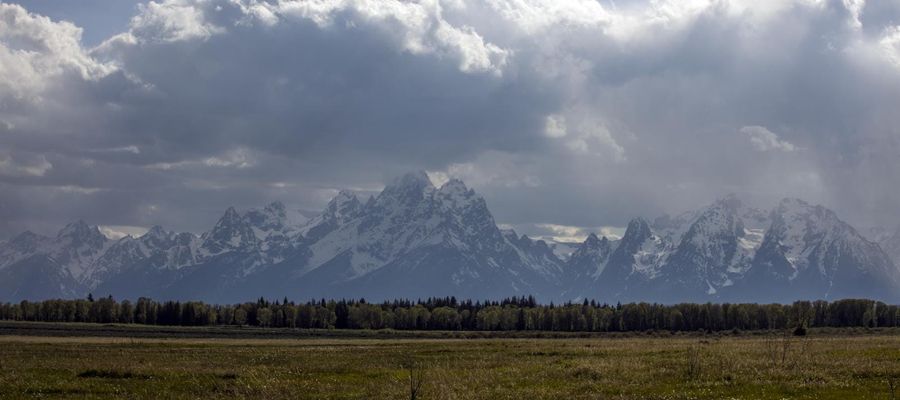
Most of the people charged with a misdemeanor in Teton County do not live in Teton County. They were here for a week in July, or a ski season, or a wedding, and they went home with a citation and a court date in a town eight hundred miles away. The first question I get from every one of them is the same: do I have to come back?
For a state charge, the honest answer is usually no, with one exception, and the rules that make that true are worth knowing before you book anything.
Two courts, two sets of rules
Start by reading the top of the citation. A ticket from a park ranger in Grand Teton or Yellowstone is a federal case, heard by a United States magistrate judge under the federal rules, and I have written about those separately. A ticket or arrest from the Jackson Police Department, the Teton County Sheriff's Office or the Wyoming Highway Patrol is a state case. Most of those go to the Circuit Court, which has original jurisdiction over every misdemeanor in the county and now sits in temporary quarters at 250 East Simpson Avenue. Some town-ordinance cases go to the Jackson Municipal Court, which holds its hearings at Town Hall. This article is about the state cases.
The citation is a promise, and a lawyer can keep it for you
When you signed the citation you made a promise to appear. Wyoming treats that promise seriously: violating it is its own misdemeanor, punishable by a fine of $25 to $750 and up to six months, and the statute says that is true "regardless of the disposition of the charge." Beat the underlying ticket and you can still be convicted of not showing up for it.
The same statute has the sentence that matters to a visitor. "A promise to appear in court may be complied with by an appearance by counsel." For an ordinary citation, my appearance on your behalf is your appearance. You do not fly back for the first date.
Video, written consent, and the one thing that still requires you in the room
The Wyoming Rules of Criminal Procedure changed at the start of 2019 to make video routine. Rule 43.1 allows an initial appearance by video with or without your consent, allows arraignment and a plea by video if you consent in writing or on the record, and in misdemeanor cases allows you to waive your rights, enter a plea and be sentenced "at a location other than the court" by video. Rule 43(c)(2) goes further for any offense punishable by no more than a year: with your written consent the court may permit arraignment, plea, trial and sentencing in your absence entirely.
So a case that resolves by agreement, which is most of them, can be finished with you at your kitchen table or not present at all. The exception is trial. Rule 43.1 says video "shall not be used for bench trials, jury trials, or felony sentencings." If we decide to try the case, you come to Jackson for it. That is a real cost, and it is one of the things I weigh with a client before deciding whether to fight.
Bond conditions written for someone who lives here
If you were arrested rather than cited, you were released on conditions set under Rule 46.1. The rule tells the judge to consider, among other things, your "length of residence in the community" and "community ties," which a visitor has none of, so the judge leans on your record and your history of showing up. The conditions themselves are the problem. "No alcohol" is easy to obey anywhere. A 24/7 sobriety condition is not, because Teton County's program has meant a breath test at the sheriff's office every morning and every evening, and nobody can do that from Denver. The statute contemplates remote monitoring devices, but a court has to order the conversion; it does not happen on its own. If a condition on your paperwork cannot be satisfied from where you live, that has to be fixed at the first appearance, not discovered when a warrant issues.
The DUI pieces that can be done in your own state
Wyoming wrote two provisions with the nonresident in mind. A person convicted of DUI must complete a substance use disorder assessment, and the statute says "a nonresident may receive a substance use disorder assessment from a provider certified by that person's state of residence." If an ignition interlock is required, a person who lives in another state "may meet the ignition interlock license requirement by completing the ignition interlock program in another state for the period required by Wyoming law." Both of those matter when the alternative is driving to Wyoming for an appointment.
What does not stay in Wyoming is the conviction. Wyoming belongs to the Driver License Compact, and Article III requires it to report each conviction of an out-of-state driver to the driver's home state. Article IV then tells the home state to treat a DUI conviction as if the conduct had happened there. Forty-seven jurisdictions are members. Georgia, Michigan and Wisconsin are not, but each has its own law about out-of-state convictions, so membership is not a reason to relax. The thing Wyoming reports is a conviction. It does not report an arrest, and it does not report a charge that was dismissed.
The administrative side runs on its own clock. If a breath or blood test came back at 0.08 or more, the notice the officer handed you started a twenty-day period to request a hearing with the Department of Transportation. Miss it and the suspension of your privilege to drive in Wyoming begins automatically on day thirty. Whether your home state acts on a Wyoming administrative suspension is a question of your state's law, and it is one to ask before you decide the hearing is not worth requesting.
What a resolution from home looks like
For a first offense with no felony history, Wyoming's deferred prosecution statute allows the court, with the consent of the state, to defer the case and place you on probation for up to three years without entering a conviction. The terms can be written for a person who lives out of state, with reporting and any classes handled where you are. A negotiated plea to a lesser charge can be entered by video. Fines can be paid to the clerk online. Either way, the file at 250 East Simpson closes without you having seen the building.
Three things to send me the day you get home
Send the citation, front and back, because the court date and the promise are on it. Send the bond paperwork if there was an arrest, because the conditions are on it. Send the notice of suspension if there was a breath or blood test, because the twenty days are running from the date on that page. Everything else, the police report, the video, the test records, I can get from the prosecutor and the agency. The three documents in your glove box are the ones that carry deadlines.
This article is general information about Wyoming law, not advice about your case.