September is the month I would send anyone to the parks. The crowds thin, the aspens turn, and the animals are doing something every hour of the day. It is also the month the violation notices change. In July the notices I see are mostly speeding on the highway through Grand Teton and traffic stops in the geyser basins. From Labor Day on, rangers write more of everything that involves an animal, a shorter day, or a road crew. Here is what changes, and what each change tends to produce.
The elk come into the developed areas
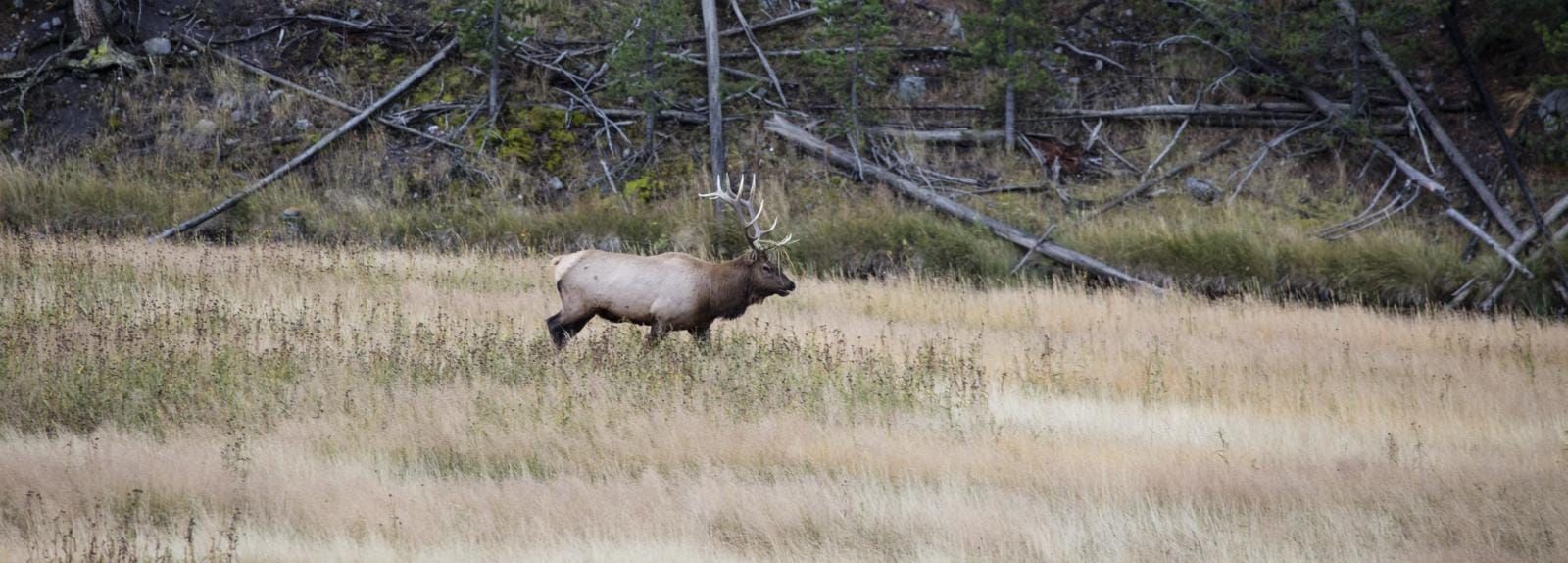
The rut runs through September and into October. Bull elk gather their cows on the lawns at Mammoth Hot Springs and along the river bottoms, and a bull in the rut will charge a person, a car, or a car door. Every year visitors are hurt standing where they should not stand.
Yellowstone's rule is twenty-five yards from elk, bison and every other animal, and one hundred yards from bears, wolves and cougars. But the compendium goes further than the number. It prohibits remaining "within any distance that disturbs, displaces, or interferes with the free unimpeded movement of any wildlife," and it separately prohibits "failing to remove oneself to prescribed distances during inadvertent, accidental, or surprise encounters with wildlife." Read those two clauses together and the rule is simple. When the bull walks toward you, you back up. If you stand your ground with a phone up, the distance you started at stops mattering.
The distance rule is a closure under 36 CFR § 1.5, and on the court's collateral schedule a closure violation carries $100 that can be paid by mail. The same conduct can also be charged under 36 CFR § 2.2(a)(2), the "feeding, touching, teasing, frightening or intentional disturbing of wildlife," and that one is a mandatory appearance: there is no amount to pay, only a date in front of the magistrate judge. Rangers write both when the animal reacted. What the elk did in the video is usually the government's evidence that you disturbed it, so keep every second of the footage and do not post it.
The bears are on the road
Fall bears eat around the clock, and in Grand Teton that puts them in the berry patches along the Moose-Wilson Road and the highway shoulders. A bear jam forms in minutes. The park's Wildlife Brigade, a bear biologist, seasonal rangers and volunteers, manages the crowd and the traffic, and its instruction is the line the law draws. The park's own guidance is to park in designated areas, never block travel lanes, and follow the directions of staff where bears are sighted.
Two regulations do the work at a jam. Stopping in the travel lane is 36 CFR § 4.13(a), stopping or parking on a park road, $100 on the schedule, and a bear jam is not an exception the regulation recognizes. Refusing a brigade member's direction is 36 CFR § 2.32(a)(2), violating the lawful order of an employee during "wildlife management operations involving animals that pose a threat to public safety." I have not seen a bear-jam prosecution announced by the U.S. Attorney's Office, and most jams end with a wave and a warning. The citations come when someone argues, gets out of the car, or walks toward the bear.
One calendar note. Yellowstone's Hayden Valley bear management area confines travel to designated trails from July 15 through September 15. After that the off-trail restriction lifts there, but the other bear management areas run on their own dates, and the sign at the trailhead controls. A closure is a closure whether or not it makes sense to you on the day.
The nighttime speed limit arrives earlier every evening
This is the change that produces the most notices, and the one almost nobody knows about. Grand Teton's compendium posts fifty-five on U.S. 89/191 and 26/287 by day, forty-five through Moose Alley and the Gros Ventre corridor, and forty-five on the whole highway at night. Night is defined as half an hour after official sunset to half an hour before official sunrise. In June that rule matters at ten o'clock. By October the forty-five is in force before most people have finished dinner in Jackson, and the drive back from Colter Bay or Signal Mountain is entirely inside it.
The nighttime signs are there, but the highway looks the same at fifty-five in the dark as it did in the afternoon, and lidar does not care what the sign said an hour ago. Speeding under 36 CFR § 4.21(c) is $10 for every mile over the posted limit plus a $30 processing fee, so fifty-nine in the nighttime forty-five is $140 and a fee. Thirty or more over is a mandatory appearance. And a ranger who watches you come through Moose Alley at dusk with elk on both shoulders can write 36 CFR § 4.22(b)(1) instead or as well: operating a vehicle "at a speed greater than that which is reasonable and prudent considering wildlife, traffic, weather, road and light conditions." That is $250 on the schedule, and it does not require you to have been over the limit at all.
The road crews have not gone home
Grand Teton's 2026 construction runs into November. The North Park Road between Leeks Marina and Lizard Creek has one-lane alternating traffic with nighttime delays, the Moose entrance is getting a roundabout with a temporary bypass, and there is work at Mormon Row and Death Canyon. Construction zones have their own line on the collateral schedule: $15 for every mile over the posted construction limit, and twenty-five or more over is a mandatory appearance, not thirty. A flagger's stop sign is an order. In 2025 a federal jury convicted an Oregon driver of a felony for driving the wrong way through a Yellowstone construction zone near Canyon and striking the employee who told him to back up. That is the extreme case, but it tells you how the government sees the person holding the sign.
What to do with the notice
A fall citation reaches you the same way a summer one does. If Box B is checked you can pay the collateral to the Central Violations Bureau and end the case, and if Box A is checked you must appear. What does not change with the season is what paying means. The Bureau's own payment page says that by paying "you may be admitting to a criminal offense and a conviction may appear in a public record," and it reports paid moving violations to the driver's home state for many jurisdictions. Before you pay a wildlife or speeding notice, know which of those consequences applies to you, and whether the charge the ranger picked is the one the facts support. Often it is not, and the difference between a closure and a wildlife-disturbance count, or between speeding and unsafe operation, is the difference between a fine and a criminal record.
This article is general information about federal park regulations, not advice about your case.
